- Cornwall cuisine treats seafood as a living product, so timing and restraint matter as much as flavour.
- Top Cornish kitchens build menus around day-boat landings, not fixed ideas, therefore dishes change fast.
- Sustainable sourcing in Cornwall often means choosing methods and seasons, not only ‘local’ labels.
- The best seafood preparation relies on clean heat, careful salting, and sauces that support rather than mask.
- Local produce from farms, dairies, and bakeries gives Cornish gastronomy its balance of sea and land.
Cornwall is one of the few places in Britain where eating feels inseparable from geography. The county sits on England’s south-western edge, and the sea presses in from three sides, so it shapes what arrives on plates and how cooks think. However, the most useful lesson from the region is not a single dish. It is a food philosophy built on respect for fresh ingredients, rapid decision-making, and the confidence to do less. Visitors might arrive hunting a pasty and leave talking about crab eaten beside a harbour wall, or oysters tasted with nothing more than a squeeze of lemon. In the background, a modern dining scene hums from casual beach cafés to Michelin-starred rooms, and it thrives because the raw materials stay close and the choices stay practical. Cornwall’s best kitchens borrow from tradition without becoming trapped by it. They treat seafood as a seasonal calendar, a supply chain, and a craft discipline all at once.
Across Cornish kitchens, the most persuasive cooking rarely shouts. Instead, it listens to the weather, the tide tables, and the phone calls from fishmongers. Consequently, technique becomes a form of courtesy: handle gently, cook precisely, and stop before you overwork the flesh. This approach also invites the land to join the conversation. Dairy, vegetables, and bread matter here, because they frame the fish and make a meal feel complete. If a reader wants a model for modern British gastronomy that still feels grounded, Cornwall offers it in plain sight.
Food philosophy in Cornwall cuisine: place-led seafood with purpose
In Cornwall cuisine, a strong food philosophy starts with a simple premise: the ingredient sets the agenda. That sounds obvious, yet many restaurants elsewhere begin with a concept and then force fish to fit. In Cornwall, top teams reverse that sequence. They ask what the boats landed, what the wind allowed, and what the season encourages. As a result, the menu becomes a living document rather than a fixed promise.
This place-led thinking grows from history as much as fashion. Mining once demanded portable, filling meals, and that practicality still lingers in the county’s food culture. Meanwhile, the coastline built habits of buying, cooking, and eating fish quickly. Therefore, even refined dining rooms often carry a tone of understatement. A lobster might arrive with a restrained butter sauce, because the kitchen trusts the sweetness of the meat.
From harbour to pass: why speed shapes taste
Seafood loses its best qualities through delay and mishandling, not through lack of creativity. Consequently, Cornish kitchens obsess over timing. A day-boat scallop, for instance, can taste clean and milky when cooked within hours. After long storage, it often tastes dull, even if the chef adds clever garnish.
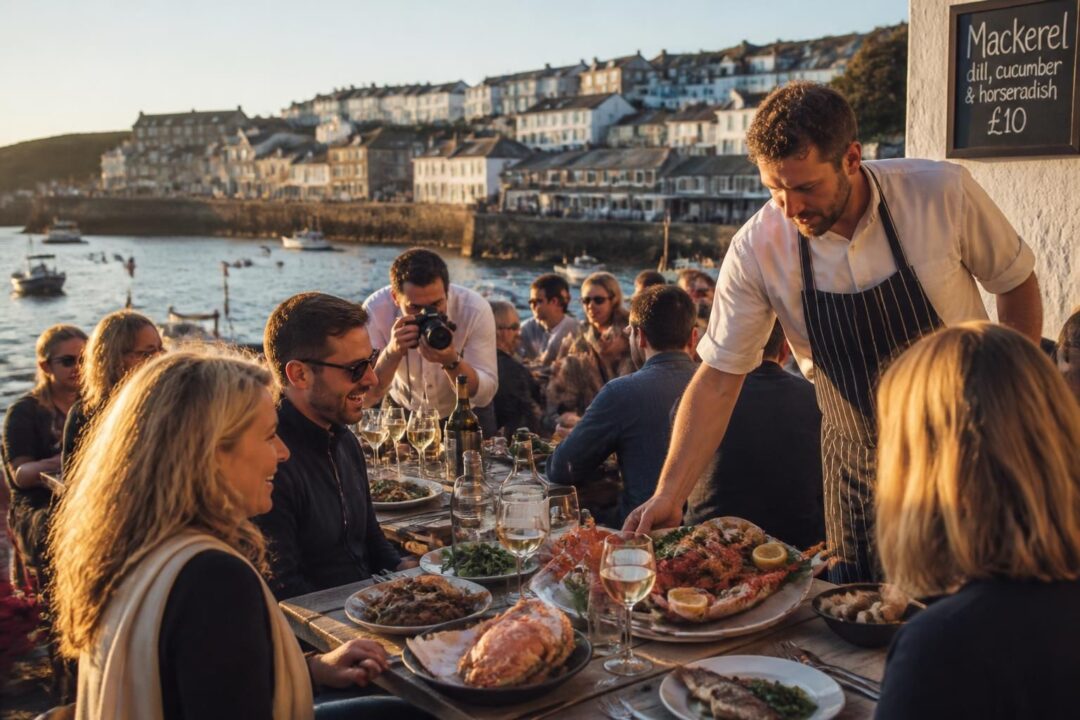
Consider a fictional but familiar scene at ‘Tide & Thrift’, a small coastal restaurant with six tables and a blackboard menu. The head chef phones the fishmonger at 9 a.m., and the answer changes the whole service. If the call brings mackerel, the kitchen plans quick grilling and sharp herbs. If the call brings hake, the team prepares for gentle heat and basting. That workflow turns logistics into flavour, and it keeps waste low.
Restraint as a modern luxury
Although Cornwall now attracts ambitious chefs and food travellers, the region’s most compelling plates still avoid clutter. In addition, the best kitchens treat garnishes as supporting actors. A sauce should help you notice sweetness or brine, not hide it. This restraint also protects consistency, because fewer elements reduce the chance of mistakes during a busy summer lunch.
Even iconic Cornish staples reinforce this idea. The Cornish pasty holds PGI protection, and the best bakeries treat it as a craft product rather than a souvenir. Likewise, Cornish clotted cream carries PDO status and strict standards, which encourages confidence in provenance. These protections reflect a wider attitude: pride has meaning only when it comes with discipline. The next step, naturally, is to look at the discipline itself—technique.
Cornish kitchens and culinary techniques: precision without theatre
Culinary techniques in Cornwall often look simple, yet they demand control. That control begins with heat management. Seafood punishes impatience, so top Cornish kitchens build systems that protect delicate flesh. For instance, they use planchas for quick searing, low ovens for gentle finishing, and warmed plates to prevent cooling at the table. Moreover, they treat salt as a timing tool rather than a seasoning added at the end.
Many chefs also work with a ‘minimum effective intervention’ mindset. They choose one dominant cooking method per fish and avoid mixing signals. Therefore, a grilled sardine stays grilled, and the garnish stays bright and raw. When a dish fails, the lesson is usually technical: heat too fierce, pan too cold, or fish held too long before service.
Seafood preparation that respects structure
Different species ask for different handling. Hake, for example, flakes into large, juicy segments when cooked with moderate heat and regular basting. By contrast, mackerel tastes best when treated assertively, because its oils welcome smoke, char, and acidity. Consequently, a good kitchen matches method to structure rather than relying on one signature style.
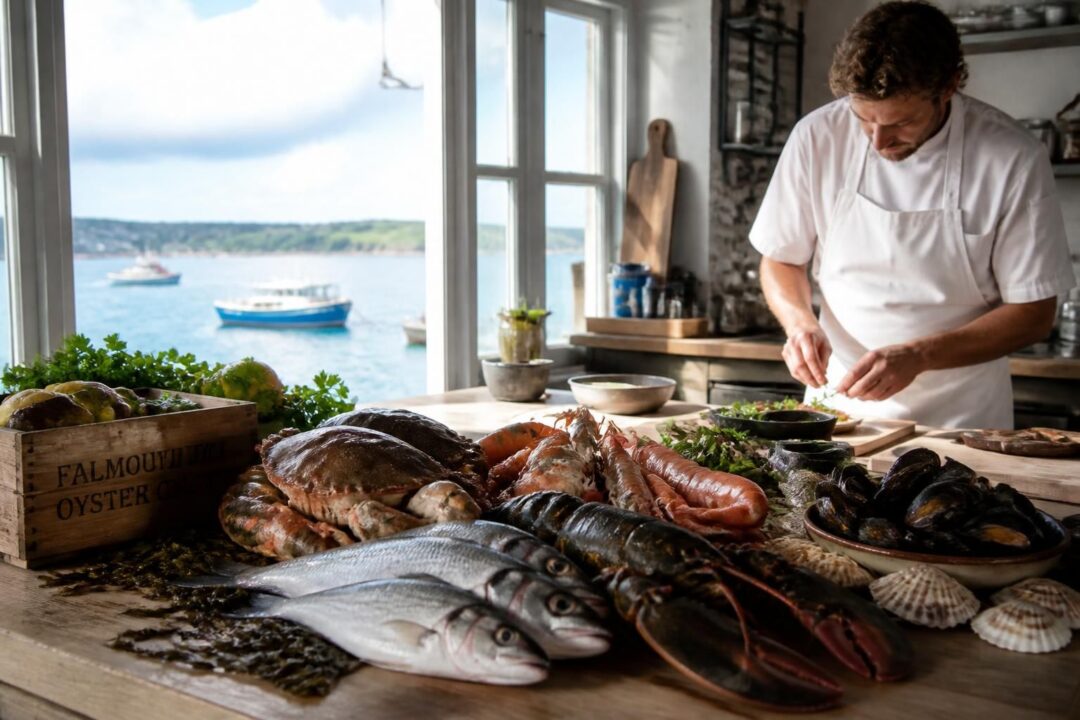
Shellfish require another kind of attention. Mussels benefit from rapid steaming and immediate serving, because they toughen if held. Crab needs careful picking and scrupulous chilling, otherwise the sweetness fades and the aroma turns muddy. Therefore, many Cornish teams schedule crab work early in the day and keep the picked meat covered and cold.
Sauces and sides: the land supports the sea
In Cornish gastronomy, sauces often bridge the sea and the county’s dairy strength. A beurre blanc enriched with local butter feels natural here, and it flatters white fish without dominating it. Likewise, a simple cream reduction can carry herbs and lemon while keeping the plate anchored. However, the best kitchens avoid heaviness by adding acidity at the end, such as cider vinegar or citrus zest.
Vegetables matter too, because they provide contrast. New potatoes, brassicas, and sea beet commonly appear, and they act as quiet partners. In addition, bread becomes a technique in itself: well-made sourdough lets you mop up juices and reduces the need for elaborate starch components.
For a practical benchmark, look at how a serious fish-and-chip shop behaves in summer. The batter stays crisp because the oil temperature stays stable. The fish tastes sweet because it arrives fresh from a local port. That everyday competence shows the region’s broader standard: technique exists to protect the ingredient. Next comes the question many diners now ask first—where did it come from, and should it be eaten at all?
Watching skilled cooks work at speed reveals the hidden craft: the quick dryness of a pan before searing, the patient rest after cooking, and the careful tasting of sauces. With that in mind, sourcing becomes more than a label; it becomes a set of decisions.
Sustainable sourcing in Cornwall seafood: season, method, and honesty
Sustainable sourcing in Cornwall often starts with choosing the right species at the right time. Cornwall’s waters offer abundance, yet the best kitchens avoid treating that abundance as limitless. Instead, they build trust by being transparent on menus and by changing dishes without apology. Consequently, diners learn to enjoy what is plentiful rather than demanding the same fish year-round.
The county’s fishing infrastructure also shapes this approach. Newlyn, near Penzance, lands more fish by value than any other port in England, and it supplies both local and national markets. However, day-boat landings from places such as St Ives, Mevagissey, and Looe often feed nearby restaurants with minimal delay. That short chain can reduce handling and preserve quality, although it still requires careful management of demand during peak holidays.
Fal oysters and the value of traditional practice
Native oysters from the Fal Estuary arrive with a story that doubles as a sustainability lesson. They are dredged under sail and oar between October and March, following local rules that protect the fishery. That method limits disturbance and keeps the practice tied to seasonality. Therefore, the oyster becomes a reminder that tradition can be a management tool, not just a romantic detail.
Festivals reinforce this seasonal rhythm. The Falmouth Oyster Festival marks the start of the dredging season each autumn. Meanwhile, Porthleven’s food festival in April often signals the return of spring energy, with chefs showcasing early catches and coastal produce. Although festival menus can feel like celebration, the best ones still communicate constraints: what is abundant now, and what should wait.
Smart substitutions that keep menus exciting
Many diners say they want sustainable seafood, yet they order only cod, tuna, or salmon. Cornish kitchens solve this gap by making ‘less famous’ species delicious. Mackerel provides a good example. It is affordable, widely available in summer, and best eaten soon after capture. Therefore, chefs lean into quick cures, sharp relishes, and grilling over high heat.
Hake offers another route. It can stand in for more pressured white fish in many preparations. Likewise, sardines can replace larger, more glamorous fish when treated with confidence. The key is to explain the choice in plain language on the menu, because education works better when it feels like hospitality.
| Species commonly seen in Cornwall | Best season window (typical) | Technique that suits it | Why kitchens value it |
|---|---|---|---|
| Mackerel | Summer | Grill fast; pair with citrus and herbs | High flavour; often a sustainable choice when fresh |
| Hake | Year-round, peaks vary | Gentle roast; baste with butter | Great texture; flexible for modern menus |
| Brown crab | Spring to autumn | Pick carefully; chill; dress simply | Sweetness and richness; ideal for sandwiches and salads |
| Native Fal oysters | October to March | Serve raw; minimal garnish | Strong sense of place; tradition supports the fishery |
When a restaurant commits to these choices, it also commits to explaining change. That explanation can feel like part of the pleasure, because it turns a meal into a conversation with the coast. Next, it helps to see where this philosophy lands in practice, from Padstow’s headline names to smaller towns that cook quietly well.
Top Cornish kitchens in practice: from Padstow to Newlyn, cooking with local produce
Cornwall’s modern reputation rests on a mix of star power and everyday excellence. Padstow became a national reference point after Rick Stein opened his first restaurant there in 1975. That moment helped frame the town as a seafood destination, and it also inspired new businesses. In the years since, other acclaimed addresses have reinforced the message that Cornwall cuisine can be ambitious while staying rooted.
Paul Ainsworth at No. 6 in Padstow holds a Michelin star, and the county also features Bib Gourmand recognition for strong cooking at more approachable prices. Yet the broader story sits beyond awards. Many independent restaurants cook to a high standard without formal theatre, and they often source within a few miles. Therefore, you can eat exceptionally well without chasing a tasting menu.
How a menu changes when you buy close to shore
Buying local produce sounds virtuous, although it only matters when the kitchen adapts its routines. A restaurant that depends on day-boat fish must plan for uncertainty. Consequently, prep lists stay flexible, sauces stay modular, and garnish choices remain seasonal. A fennel salad might appear one day, while a warm potato dressing replaces it the next.
In practical terms, this means chefs design ‘families’ of dishes. A simple example: grilled fish with herb butter can work for sardines, mackerel, or lobster, provided the cooking time changes. Likewise, a light shellfish broth can frame mussels or clams, depending on what arrives. This design approach supports sustainable sourcing because it prevents the menu from demanding a single species.
Newlyn, ports, and the credibility of supply
Newlyn’s role as England’s largest fishing port by value adds weight to Cornwall’s seafood narrative. However, credibility also comes from smaller harbours where diners see boats tied up outside the restaurant window. That visibility creates accountability. If a menu claims ‘local crab’, people notice whether crab pots sit on the quay.
Fishmongers act as translators in this system. They tell chefs what is plentiful, what is scarce, and what quality looks like today. As a result, the best relationships feel less like procurement and more like collaboration. If a run of sardines arrives in good condition, the kitchen can feature them boldly and price them fairly.
The supporting cast: dairies, bakeries, and drinks
Seafood shines brighter when the rest of the table holds up its end. Cornwall’s dairy culture provides that support. Cornish clotted cream, protected since 1998, anchors the county’s sweet reputation, and it also signals how seriously Cornwall treats provenance. Moreover, cheeses such as Cornish Yarg—wrapped in nettle leaves—show how local craft can become a national calling card.
Drinks complete the picture. St Austell Brewery and Sharp’s have long shaped pub culture, while smaller craft names add variety. Meanwhile, Camel Valley’s sparkling wines and Tarquin’s gin illustrate how Cornwall’s mild climate and entrepreneurial streak feed modern gastronomy. After all, a seafood meal often ends with a local cider or a glass of Cornish fizz. The next consideration is how you, as a traveller, can taste this without turning it into a stressful checklist.
Once you see how ports, producers, and chefs connect, planning a trip becomes easier. The final piece is knowing what to order, when to book, and how to read a menu that changes with the tide.
How to eat like a local: practical seafood choices, towns, and timing
Eating well in Cornwall does not require insider status, although it helps to approach meals with flexibility. The county’s best seafood experiences often happen outside formal dining rooms. For instance, a crab sandwich eaten beside a harbour can feel more ‘Cornish’ than a multi-course dinner. Therefore, plan for a mix: one booked meal, one walk-in café, one pub, and one simple takeaway on the beach.
Timing matters as much as location. Summer brings long evenings and busy kitchens, yet it also brings queues. Spring and early autumn often feel calmer while still offering variety. Winter, on the other hand, rewards those who like stormy views and cosy pubs. Consequently, the best season depends on your appetite for crowds versus atmosphere.
What to order when the menu looks unfamiliar
A changing menu can confuse diners who want certainty. However, unfamiliar names often signal better alignment with sustainable sourcing. If you see mackerel, sardines, hake, or local crab, those are usually strong choices. Likewise, native oysters in season often offer a direct taste of place.
When in doubt, ask one specific question: ‘How is it cooked?’ That invites the staff to explain technique without feeling like a quiz. Moreover, it helps you choose based on texture and flavour, not prestige. A simply grilled fish with a sharp dressing may suit you better than a rich stew, even if both sound attractive.
Town-by-town rhythm for food travellers
Different towns offer different styles of eating. Padstow still carries the buzz of destination dining and seafood legacy. St Ives often balances beach cafés with polished bakeries. Falmouth feels lively, with an independent food culture and strong links to oysters. Penzance and the Mousehole area bring character and a sense of western Cornwall’s edge-of-the-map drama.
Yet smaller places can deliver the most memorable plates. Port Isaac, for instance, trades on scenery, although the best meals still depend on kitchen competence. Likewise, Mevagissey and Looe can reward you when you follow the harbour rather than the hype. The consistent rule remains: choose places that talk plainly about fresh ingredients and cooking methods.
A field guide to ordering well, without overthinking
- Pick one ‘raw bar’ moment, such as oysters in season, and keep the garnish minimal.
- Order one grilled oily fish dish, because Cornwall’s coast suits that bold flavour.
- Choose one shellfish plate that shows technique, such as mussels cooked to order.
- Balance seafood with local produce, such as new potatoes, greens, and good bread.
- Leave room for dairy-based treats, because clotted cream and ice cream belong to the landscape.
Finally, remember that Cornwall’s food philosophy rewards patience. If a kitchen sells out of crab, it may signal honesty rather than failure. If the menu changes overnight, it may signal a better catch. That mindset turns a meal into a small act of coastal literacy, and it makes you part of the rhythm rather than a spectator.
How can you tell whether a Cornish restaurant takes seafood seriously?
Look for menus that change often, clear mention of local ports or day-boat sourcing, and simple cooking methods described plainly. Also, staff should explain how a fish is cooked and why it is on the menu today.
What seafood choices usually align with sustainable sourcing in Cornwall?
Seasonal options such as mackerel in summer, native Fal oysters in their October–March season, and locally landed species like hake often fit sustainability goals. However, the key is season and method, so ask what is landed locally that week.
Is Padstow still the best base for seafood-focused travel?
Padstow remains influential and offers strong dining options, especially for booked meals. Nevertheless, Falmouth, St Ives, and the Newlyn–Penzance area can deliver equally good seafood with different atmospheres and, at times, less congestion.
What is the simplest ‘restaurant-level’ tip for seafood preparation at home?
Control heat and stop early. Dry the fish, preheat the pan properly, season with intent, and cook until just opaque before resting briefly. Then add acidity at the end, such as lemon or cider vinegar, to lift flavour without masking it.

Independent food and travel writer with a passion for uncovering Cornwall’s hidden culinary gems and scenic adventures. Combining local knowledge with a love for storytelling to bring Cornwall’s unique flavors and experiences to life.