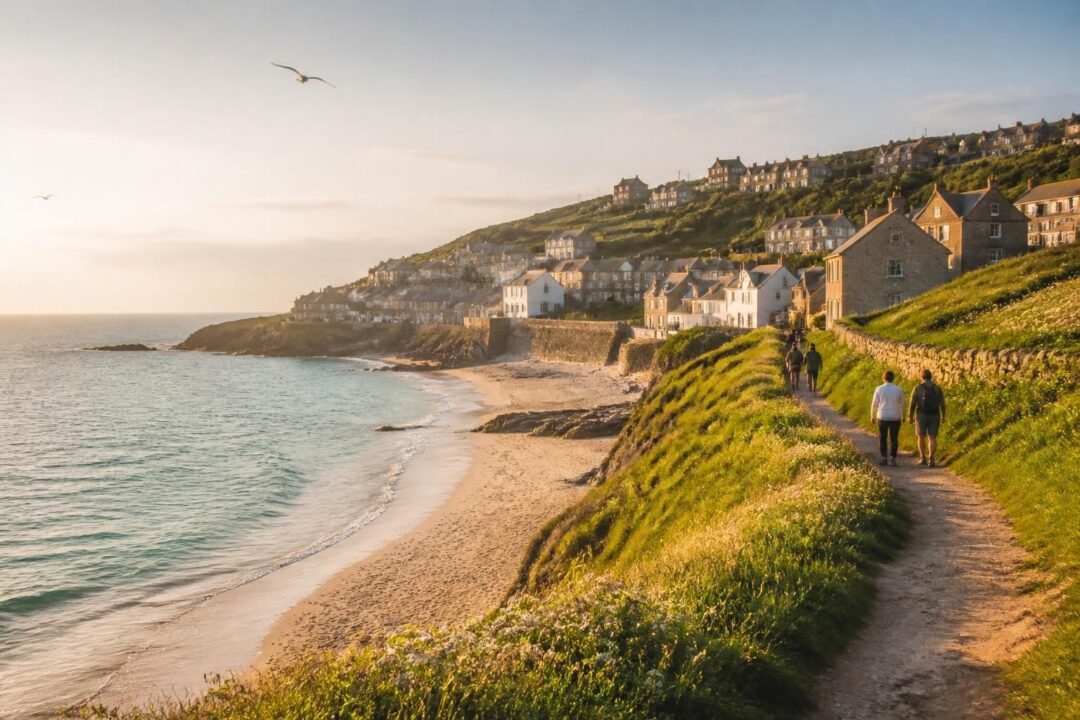
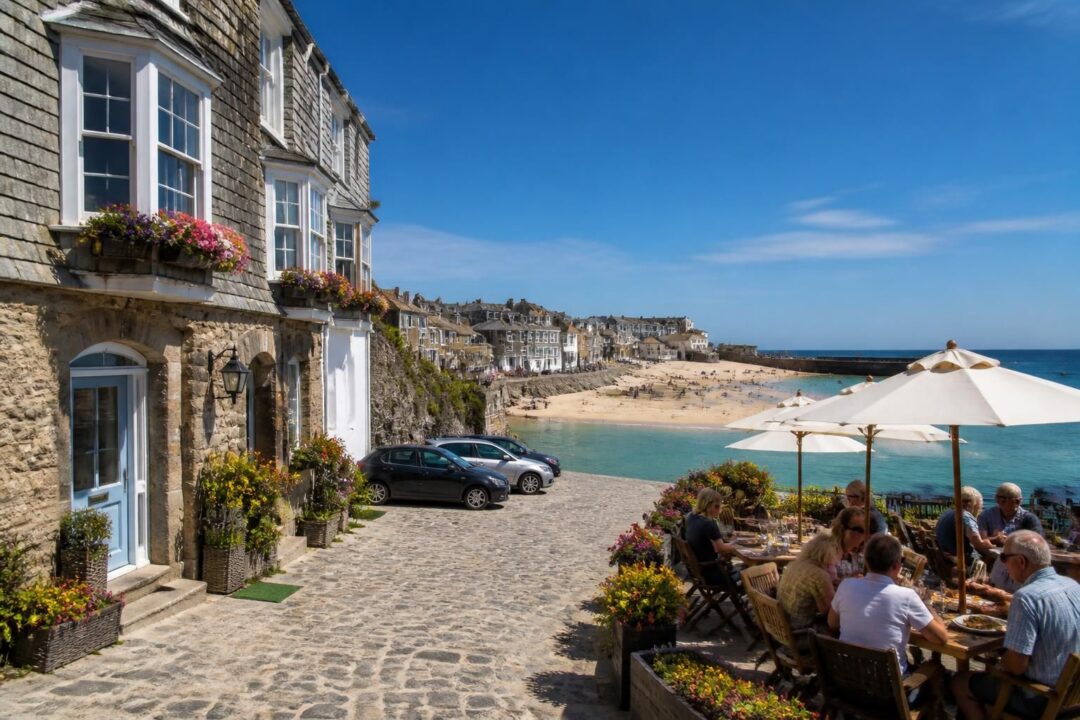
- St Ives rewards early starts: arrive before mid-morning, then explore on foot for easier sightseeing.
- For a first trip, prioritise accommodation near the harbour, Porthminster, or Porthmeor, then add one quieter base such as Carbis Bay.
- Choose parking outside the centre, then use shuttles or the branch line for a calmer arrival.
- Restaurants book out quickly in peak weeks, so secure key tables and keep bakeries and beach takeaways as flexible backups.
- Match your visit to your pace: summer for beach time, autumn for culture, winter for storms and bargains, spring for festivals and coastal walks.
St Ives sits on Cornwall’s north coast like a bright brushstroke, with water on three sides and streets that tilt towards the harbour. That geography shapes the town’s feel and your logistics. Light bounces off the bay, gulls patrol the quayside, and boats nod against their moorings. Consequently, the same compactness that makes St Ives so walkable also makes driving feel awkward, especially on a first trip. Planning where to stay, where to leave the car, and where to eat matters more here than in many seaside towns.
This St Ives travel guide focuses on practical choices that protect your time. It covers places to stay across different budgets, parking strategies that avoid the tightest lanes, and restaurants that show off local cuisine without turning every meal into a high-stakes booking. Along the way, it builds a simple thread: follow a fictional couple, Mira and Tom, on their first weekend in town. Their decisions mirror the ones you will make, from train versus car to harbour snacks versus a long lunch with a view.
St Ives Travel Guide for a First Trip: Layout, Neighbourhoods and What to Expect
St Ives looks small on a map, yet it divides into distinct pockets that affect your day. The harbour area forms the busiest core. Fore Street threads through boutiques and galleries, and it can feel shoulder-to-shoulder in school holidays. However, you can step a few minutes uphill and find quieter lanes and sudden views across rooftops to the sea. For first-time sightseeing, the key is to understand the town’s natural “loops”.
The most useful loop circles the harbour, then climbs towards the Tate and Porthmeor. From there, it drops back via narrower streets towards shops and cafés. That route fits a half-day and keeps elevation manageable. Another loop tracks Porthminster Beach, then swings past the station. Therefore, you can pair a beach session with a train arrival or departure without backtracking.
Harbour, Porthminster and Porthmeor: three moods in one town
The harbour provides classic St Ives theatre: boat trips, seafood counters, and benches for watching the tide. It also concentrates noise and queues. Porthminster, closer to the station, suits calm swims and family beach time, since the bay often shelters it from stronger swell. Porthmeor, by contrast, catches Atlantic energy and attracts surfers, especially when the wind turns. As a result, your beach choice becomes part of your itinerary rather than an afterthought.
Mira and Tom arrive with one objective: combine art with sea air. They start at the harbour, then head towards Porthmeor for an afternoon surf lesson. Even though they expected the town to be “flat”, the climbs surprise them. That small detail influences where you might want accommodation if you have limited mobility or heavy luggage.
Culture and coastal walking as core sightseeing
St Ives’ art scene feels woven into daily life. Tate St Ives anchors the modern collection and often draws long lines in summer. Meanwhile, the Barbara Hepworth Museum and Sculpture Garden offers a quieter, more intimate encounter. The setting makes the work feel inseparable from place, which helps explain why artists still chase this light.
For outdoor sightseeing, the South West Coast Path creates ready-made half-day walks. The section towards Carbis Bay offers constant sea views and a satisfying sense of leaving town behind. On the other hand, walking towards Zennor becomes wilder and demands more stamina. The best travel tips here stay simple: check tide times, pack a light layer, and carry water. The coast can feel warm in sun and sharp in shade, sometimes within minutes.
St Ives rewards visitors who plan loosely but move early, and that rhythm leads naturally into the next question: where to base yourself for sleep and sunrise.
Where to Stay in St Ives: Accommodation Areas, Styles and Smart Booking Choices
Accommodation in St Ives sells on two promises: proximity and atmosphere. Being near the harbour means stepping out into the postcard scene, yet it also means more noise and higher prices. Staying uphill often brings better value and easier access to long-stay car parks, although you will climb after dinner. Consequently, choosing a base should match how you plan to spend mornings and evenings, not just afternoons.
For a first trip, many visitors do best with one of three bases. Harbour-side suits those who want dawn walks and late-night drinks within minutes. Porthminster and the station side fit families who value beach access and smoother arrivals. Carbis Bay, a short hop by train, provides more space and a calmer feel while keeping St Ives close. Moreover, it can reduce the “holiday crush” if you visit in July or August.
Choosing the right “places to stay” by travel style
Couples often favour small hotels and guesthouses close to galleries and restaurants. That setup supports a simple day: coffee, exhibition, swim, dinner. Families may prefer self-catering flats near Porthminster. You can store beach gear, cook one meal at home, and keep naps realistic. Groups, meanwhile, benefit from cottages slightly back from the centre, where living areas feel less compact.
Mira and Tom choose glamping-style pods near Carbis Bay for their weekend. The appeal lies in privacy and a spa-like reset after long walks. The trade-off is a short commute into St Ives, although the branch line makes it straightforward. Therefore, “outside town” does not mean disconnected here.
Timing, value and practical booking travel tips
Summer stays book early, and popular weekends can vanish months ahead. If you want specific restaurants, book the table first, then lock in your room. In addition, check whether your accommodation includes permits for local parking, since some properties arrange access or discounts. That can change your daily costs.
Autumn offers a sweet spot for many travellers. The sea stays relatively warm, light turns softer, and galleries feel less crowded. Winter brings sharper drama on the coast, plus better deals, while many cafés remain open. Spring, especially May, delivers longer days and festival energy. As a result, you can tailor accommodation to the season rather than forcing the same plan year-round.
| Base | Best for | Main advantage | Trade-off |
|---|---|---|---|
| Harbour & Fore Street | Short breaks, culture, dining | Walk-everywhere convenience | Noise and higher prices |
| Porthminster & station side | Families, rail arrivals | Easy beach access and flatter routes | Less “old town” atmosphere at night |
| Uphill residential lanes | Value seekers, longer stays | Quieter evenings and space | Steeper walks back from town |
| Carbis Bay | Calm base with quick links | More relaxed beaches and resorts | Requires train or a longer walk |
Once you know where you will sleep, the next make-or-break detail is arrival. In St Ives, parking and transport choices can decide whether day one feels effortless or tense.
Watch for practical visuals on beach-to-town walking routes and typical crowd levels, then move on to the transport plan that best fits your schedule.
Parking in St Ives and Getting Around: Stress-Free Arrivals by Car, Train and Bus
St Ives punishes indecision at the wheel. Streets tighten, visibility shrinks, and oncoming traffic can force awkward pauses. Therefore, the best parking strategy for a first trip aims to keep you out of the centre. Park outside, then arrive by shuttle, foot, or train. You will protect your mood and your mirrors.
Trenwith Park and Ride stands out for capacity and convenience, with hundreds of spaces and a shuttle into town. It also suits larger vehicles, although it does not permit overnight stays. Another option sits at St Ives Rugby Club, which often offers good value and a simple shuttle fare. The Island Car Park, while central, requires navigating narrow streets and fills quickly. Consequently, it works best for early arrivals and confident drivers in smaller cars.
Train arrivals that double as sightseeing
The branch line from St Erth to St Ives delivers one of Cornwall’s most scenic short rail journeys. It skims the coast, frames the bay, and builds anticipation with each curve. In practical terms, it also solves the parking problem. St Erth’s park-and-ride facilities make it easy to leave the car and swap stress for views. Moreover, the train drops you close to Porthminster, so beach time can start within minutes.
Long-distance travellers often connect via Great Western Railway services to St Erth. The overall journey from London can take a little over six hours, depending on connections. Alternatively, the Night Riviera Sleeper reaches Penzance overnight, then links back to St Erth. That option suits weekenders who want to maximise daylight on arrival day. As a result, you can treat travel time as part of the holiday rather than a hurdle.
Moving around town without a car
On foot, St Ives feels designed for wandering. Most attractions sit within a compact radius, and the slow pace suits browsing and spontaneous stops. Nevertheless, the hills matter. Choose footwear with grip, since cobbles and steps can become slick after rain or sea mist.
For short hops beyond the centre, local buses cover key points such as Carbis Bay, Hayle, and touring parks. Two main operators run regular services, and their routes help visitors avoid repetitive uphill walks. Mira and Tom use buses once, after a long coastal trek, and the small fare feels like a bargain compared with taxi demand in peak hours.
Practical travel tips for parking days and day trips
Arrive early, especially in summer. Aim for before mid-morning if you want choice. If you plan several days in town, consider multi-day parking options where available, since they can reduce daily hassle. In addition, keep a reusable water bottle and a light rain layer in your day bag. Cornish weather changes quickly, and you will walk more than expected.
Transport planning sets up everything else, including where and when you eat. Once you can move smoothly, the restaurants scene becomes a pleasure rather than a puzzle.
Best Restaurants in St Ives: Local Cuisine, Bakeries, Coffee Spots and Sea-View Dining
St Ives punches above its weight for food. You will find bakeries that fuel beach days, cafés that take coffee seriously, and restaurants that treat seafood as more than a garnish. However, the town’s popularity means the best tables disappear fast in summer and during festival weeks. A smart plan mixes booked meals with flexible options you can grab and go.
Start with the easy wins. Coffee culture thrives here, with small counters near the water and careful sourcing from Cornish roasters. Mount Zion Coffee, close to the pier, focuses on quality and speed, which helps when queues build. Yallah Coffee also draws fans for single-origin beans and a sustainability-led approach. Therefore, morning routines can feel like a ritual rather than a scramble.
Seafood with a view versus casual beach eating
If a first trip calls for one memorable lunch, Porthminster Beach Café often delivers. The setting sits right on the sand, and seafood takes centre stage. Book ahead when possible, then build your day around the table. On the other hand, casual meals suit St Ives just as well. The Fish Shed by Porthmeor offers a simpler beachside feel, where sea air plays as much a role as seasoning.
For evening dining, St Eia blends seasonal cooking with a wine-led mood near Porthmeor. Talay Thai adds a different note, pairing harbour views with punchy flavours. Pizza lovers can look to Onzo for wood-fired pies, either eaten in or carried down to the shore. Consequently, you can shape your restaurant choices to match weather and energy levels.
Classic pubs, small plates and the case for early bookings
For a drink with history, The Sloop Inn remains a local landmark. It anchors the harbour with a traditional pub feel, which suits a post-walk pint. Silco, also near the water, leans towards contemporary small plates and cocktails in a more polished room. That contrast gives you options for different nights, even on a short stay.
Mira and Tom book one dinner, then leave the second night open. It proves a wise balance. When wind pushes mist across the harbour, they choose a warm pub corner instead of a long walk to a set reservation. Flexibility, in other words, protects enjoyment.
Bakeries, ice cream, and the practical realities of seagulls
No St Ives travel guide should ignore the humble pasty. St Ives Bakery supplies dependable grab-and-go fuel, from savoury classics to sweet pastries. Eat near the harbour if you like people-watching, although vigilance matters. Gulls here act like professionals, and they will snatch unattended food. Keep your purchase close, and you will keep your lunch.
For dessert, Moomaid of Zennor provides a local favourite and suits a slow harbour stroll. That small treat can punctuate a full day of sightseeing and walking, which is exactly how St Ives wants to be experienced.
Look for menu walkthroughs and booking advice, then use the next section to match eating plans to the season and the events calendar.
Season-by-Season St Ives: Best Times to Visit, Events and Easy Itineraries for First-Time Sightseeing
St Ives changes character with the calendar. Summer brings beach weather and the largest crowds. Autumn calms the streets while keeping long, golden afternoons. Winter sharpens the coastline into something dramatic, and spring arrives with colour on the cliffs. Therefore, the best time to visit depends on whether you prioritise swimming, galleries, festivals, or quiet walks.
Summer: beach-first planning and crowd-smart timing
In June to August, sea temperatures reach their most inviting point, and beaches become the main stage. Families spread out on Porthminster, while surfers gravitate to Porthmeor. Nevertheless, late July and August can feel busy. If you want ease, visit outside school holiday peaks, or start days early and dine earlier in the evening.
Seasonal events add to the energy. Lifeboat Day in August raises funds for RNLI work, an organisation that continues to save dozens of lives each year around UK coasts. St Ives Carnival also brings a colourful parade and music. As a result, you will see the town at its most communal, not just its most photogenic.
Autumn: culture-led weekends and softer light
September and October suit travellers who want art, walking, and better access to favourite spots. The September Festival mixes music, poetry, talks, exhibitions, and workshops, which can turn a weekend into a cultural sprint. In October, film events in Cornwall often bring screenings and discussions to St Ives. Consequently, rainy spells feel less like a setback and more like an excuse for galleries and cafés.
Winter and spring: bargains, storms, flowers and food festivals
Winter in St Ives stays relatively mild, and snow remains uncommon. You will still find cafés open, plus dramatic seas when Atlantic storms roll through. Accommodation prices often drop, so a short break can feel surprisingly good value. In addition, beaches frequently relax dog restrictions in winter, which makes long coastal walks easier for pet owners.
Spring, especially March to May, brings longer daylight and cliffside colour from gorse and sea thrift. May also hosts the St Ives Food and Drink Festival, with cooking demonstrations, street food, and music on the beach. That event ties local cuisine to place in a way that feels immediate and relaxed.
Two simple itineraries that fit real travel patterns
The day trip works best with an early arrival. Park at St Erth or Trenwith, then begin with coffee near the harbour. Spend late morning in Tate St Ives or the Hepworth, then walk the Island for views. After lunch, choose one beach and commit to it. Finally, finish with ice cream and a harbour drink before heading out.
The weekend itinerary adds breathing space. Day one focuses on art and shopping along Fore Street, plus sunset at Porthmeor. Day two takes the coast path towards Carbis Bay, with a long lunch or picnic, then a final swim if the tide suits. Those shapes keep sightseeing varied, which is the secret to a satisfying first trip.
What is the easiest parking option for a first trip to St Ives?
For most visitors, an out-of-centre option works best. Trenwith Park and Ride offers a large capacity and a shuttle into town, while St Erth Park and Ride pairs parking with the scenic branch-line train. Both options avoid the tight lanes near the harbour.
Where are the best places to stay in St Ives without needing a car?
Harbour and Fore Street locations suit walkers who want restaurants and galleries on the doorstep. Porthminster and the station side also work well, especially for families arriving by rail. Carbis Bay adds a calmer base and still connects easily by train.
Do restaurants in St Ives need advance booking?
In peak summer weeks and during key festivals, booking is strongly advised for popular sea-view restaurants. However, you can keep flexibility by mixing one reserved meal with bakeries, café lunches, and beach takeaways for the rest of the trip.
How many days are enough for St Ives sightseeing?
A day trip covers the highlights if you start early and focus on one major gallery plus one beach. A weekend feels more balanced, since it allows time for a coastal walk, shopping, and unhurried meals without rushing between spots.

Independent food and travel writer with a passion for uncovering Cornwall’s hidden culinary gems and scenic adventures. Combining local knowledge with a love for storytelling to bring Cornwall’s unique flavors and experiences to life.