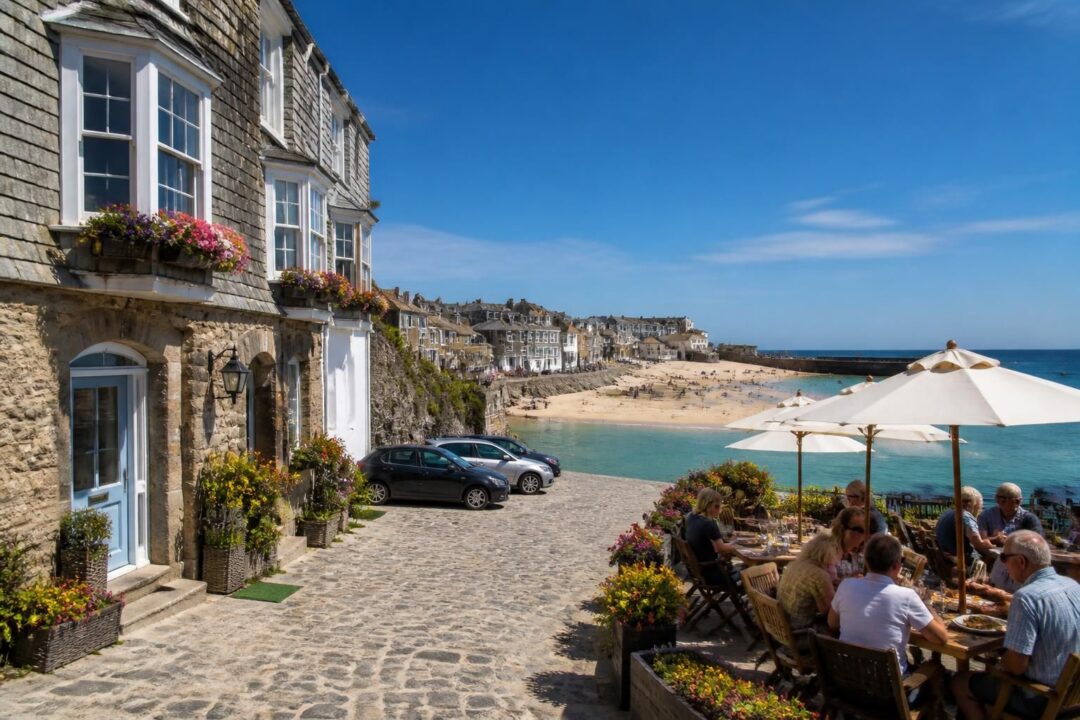
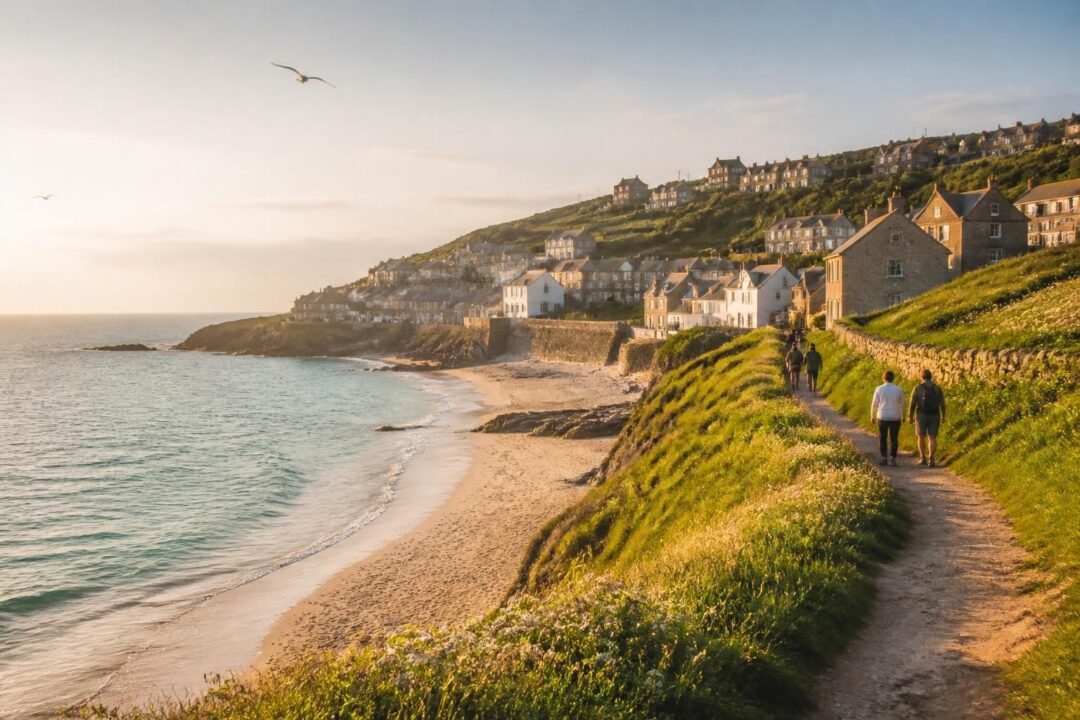
If St Ives has a signature, it is the way colour shifts by the hour: green-blue shallows at breakfast, bright silver chop by lunchtime, and honeyed light on the harbour wall before dusk. A weekend getaway here rarely feels rushed, even when the town hums with summer energy. That calm comes from how close everything sits together. In minutes, you can move from seafood lunches by the seaside to the first steps of the coast path, then back into town for galleries that frame the Atlantic as if it were another canvas. Meanwhile, the beaches each carry their own mood. One offers clean, dependable surfing swell, while another stays glassy and child-friendly. Add the train that skims the edge of St Ives Bay, and the sense of coastal Cornwall as a living panorama becomes hard to resist.
Yet the best weekends do not come from ticking off sights. They come from pacing the day, reading the tides, and letting weather shape the plan. Therefore, this guide treats St Ives like a set of linked experiences: sand and salt early, art and history as the light sharpens, then long walks and late drinks when the town quietens. Along the way, practical choices matter. Footwear can make hiking feel effortless or punishing, and booking popular tables can decide whether dinner ends in delight or compromise. With that in mind, the pages below map a weekend built from simple, repeatable pleasures: sea swims, scenic views on cliff trails, and the kind of meals that taste of the shore.
- Best beaches in St Ives for families, calm water, and surfing
- Coast path walks to Carbis Bay, Lelant, Zennor, and the Island
- Art and heritage highlights: Tate St Ives, Barbara Hepworth, and the local museum
- Food and evening atmosphere: seafood spots, pasties, and harbour pubs
- Practical planning: tides, footwear, train links, and timing for scenic views
St Ives Beaches for a Weekend Getaway: Where to Swim, Sunbathe and Surf
St Ives earns its fame through beaches that sit right on the town’s edges, so a holiday can stay car-light and spontaneous. However, the best choice depends on tide, wind, and who is travelling. A family with small children often wants shallow water and easy facilities, while a board rider looks for shape and consistency. Therefore, it helps to treat each bay as a different tool in the kit, rather than a single interchangeable strip of sand.
Porthminster Beach: calm water, easy access, and all-day comfort
Porthminster sits close to the station, so it often becomes the first taste of seaside life after arrival. The shore slopes gently, and the water usually stays calmer than exposed beaches. Consequently, it works well for early paddles, supervised swims, and relaxed floating when the sun holds.
Facilities shape the mood here. Showers, toilets, and a beach café keep the day simple, while hire shops make it easy to try paddleboarding or kayaking without hauling gear. Moreover, seasonal lifeguards add reassurance when the beach fills. For a weekend getaway, that convenience can turn a short stop into a full afternoon, especially if the plan includes a later hike on the coast path.
Porthmeor Beach: St Ives surfing culture with a front-row view of the Atlantic
Porthmeor is where St Ives often feels most athletic. The bay takes swell more readily, and the breaks can suit improvers as well as confident surfers. As a result, surf schools cluster nearby with lessons and rental boards, and the beach carries a lively rhythm of wetsuits, wax, and post-session hot drinks.
Yet it is not only for surfing. The sand runs wide at low tide, and the horizon stays open, so sunbathers still find space. In addition, Tate St Ives sits above the beach, and that pairing feels uniquely local. You can watch sets roll in, then step into galleries that explore the same light and sea from different angles. That contrast becomes a defining feature of coastal Cornwall in miniature.
Porthgwidden and Harbour Beach: sheltered swimming, rock pools, and harbour watching
Porthgwidden offers a smaller, more protected bowl of sand, which often means calmer water for children and cautious swimmers. Therefore, it suits short dips, beginner paddleboarding, and unhurried beach walks. The atmosphere tends to feel intimate, even when the town is busy.
Harbour Beach, beside the working harbour, trades openness for character. Fishing boats and day-trip craft come and go, and the edges reveal tide pools that reward patient looking. Consequently, it is a strong choice for families who want a nature-focused hour, rather than a full sunbathing session. Bring a small net or simply use eyes and curiosity, since crabs and tiny fish appear as the sea retreats.
| Beach | Best for | Typical water feel | Helpful local tip |
|---|---|---|---|
| Porthminster | Families, easy swimming, hire activities | Often calmer in the bay | Arrive earlier on sunny days for easier parking and café queues |
| Porthmeor | Surfing, big-sky scenic views | More exposed to swell | Book surf lessons ahead in peak school holidays |
| Porthgwidden | Sheltered paddles, quiet dips | Usually gentler | Check tide times to maximise sand space |
| Harbour Beach | Rock pooling, harbour atmosphere | Changes quickly with tide | Best at low tide for exploring marine life |
Once the beach choice matches the day’s conditions, the weekend feels smoother. Next comes the question of how to leave the sand behind without losing the sea, and that is where the coast path earns its place.
South West Coast Path Around St Ives: Coastal Cornwall Hiking with Sea-Level Drama
The South West Coast Path runs for hundreds of miles, yet around St Ives it feels personal. The trail threads beaches, woods, headlands, and small villages with very little fuss. Moreover, you can tailor hiking to the weather. A short out-and-back suits a windy day, while a longer point-to-point can become the centrepiece of a holiday.
St Ives to Carbis Bay and Lelant: beaches linked like stepping stones
The walk towards Carbis Bay offers a gentle start for most people. You can follow the line of the bay, with sandy interruptions that invite detours and swims. Consequently, it works well for mixed groups where some want to stroll and others want to pause for photos or paddles.
Carry on to Lelant and the character changes. The scenery opens into broader sands, and the pace slows as the village comes into view. Likewise, this route helps families because it can be broken into small victories: reach Carbis Bay for a break, then decide whether energy and tide allow for more. If legs feel heavy, the coastal train becomes a smart reset, since it runs with memorable scenic views along the waterline.
St Ives to Zennor: a wilder coast path for confident walkers
The path to Zennor asks more of you. It rises and falls along rocky edges, and the footing can feel uneven after rain. Therefore, sturdy shoes matter, and a light jacket can save the day when squalls sweep in from the Atlantic.
However, the reward lands in layers. The cliffs sharpen, the sea turns louder, and coves appear like secret rooms. In addition, the route suits travellers who want the ‘coastal Cornwall’ postcard, only with salt spray and effort included. Zennor itself feels like a small pause in time, which makes a packed lunch or pub stop taste better than it has any right to.
Godrevy Head and longer links towards Hayle: wildlife and lighthouse horizons
For a different angle on St Ives Bay, Godrevy Head offers a comparatively easy outing with lighthouse views that anchor the horizon. As a result, it suits those who want distance without technical terrain. Keep eyes on the water, because seals often surface near rocks, and dolphins sometimes pass through in small pods.
If the weekend schedule allows, longer links towards Hayle extend the sense of space. The landscape broadens into long beach stretches that feel restorative after town crowds. Consequently, many walkers plan a one-way hike and finish with refreshments and a train ride back, rather than repeating steps. That simple logistics choice can keep energy high for the evening.
After a day on the coast path, the mind often craves something different from cliffs and wind. Fortunately, St Ives answers with art that grew from the same weather and light.
Tate St Ives, Barbara Hepworth and the Town’s Creative Pulse by the Seaside
St Ives does not treat art as an optional rainy-day extra. Instead, galleries and studios sit in the daily flow of the town, as common as cafés and beaches. Therefore, even a short weekend getaway can include culture without feeling like a detour. The key is timing. Visit in the middle of the day when the sun sits high, then save golden-hour wandering for the harbour, when the town looks like a painting anyway.
Tate St Ives: modern art with the Atlantic framed in glass
Tate St Ives stands above Porthmeor like a lookout with a different purpose. It focuses on modern and contemporary work, and it also traces the creative community that formed here in the twentieth century. Consequently, you do not only see individual pieces. You see how artists responded to the coastline, the quality of light, and the sense of distance at sea.
Practical details help you plan around beach time. The gallery typically opens daily, with later hours on selected days in peak periods, so an evening slot can dodge midday queues. Moreover, booking ahead can protect a weekend schedule when the town is busy. After the exhibits, the view itself becomes part of the visit, since the windows pull the seaside into the building.
Barbara Hepworth Museum and Sculpture Garden: quiet craft, strong forms
The Barbara Hepworth Museum and Sculpture Garden offers something rarer than blockbuster display: intimacy. It occupies Hepworth’s former home and studio, so the space still feels like a place of work rather than a showroom. Therefore, visitors often slow their pace without noticing.
The garden sets sculptures among plants and shifting shadows. As a result, the pieces change through the day, and even a second visit can feel new. This is a good stop for anyone who enjoys craft detail, because tools and working areas help explain how large ideas become physical objects. If the weather turns, this calm corner can rebalance the day, before the town’s energy returns.
St Ives Museum and independent galleries: the fishing town beneath the gloss
To understand St Ives beyond the postcard, the local museum provides context. It follows the fishing heritage and the evolution into a creative hub. Consequently, objects and photographs make the harbour feel less like scenery and more like a workplace shaped by tides and seasons.
Independent galleries fill the lanes, and they reward curiosity. You might see small prints inspired by coast path walks, ceramics that echo sea colours, or paintings that fix a single evening sky. Moreover, buying local art can become the most personal souvenir of a holiday, because it carries the place home without needing a suitcase.
Art can sharpen appetite, and St Ives knows how to feed that feeling. Next comes food that leans on the day’s catch, plus pubs that keep the harbour lively after dark.
St Ives Dining and Nightlife: Seafood, Harbour Pubs and After-Walk Comfort
Food in St Ives works best when it stays close to the water. The town’s strongest kitchens tend to keep menus seasonal, with fish and shellfish taking centre stage. However, a good weekend getaway also needs easy options between beaches and hiking, so bakeries, takeaway lunches, and simple cafés matter just as much as smart dining rooms.
Sea-to-table meals: making local seafood the main event
Restaurants around the harbour and Porthminster often build dishes around the day’s landings. Therefore, the best order may not be a fixed favourite. If crab looks particularly good, choose it. If the board lists scallops, treat them as a short seasonal window rather than a routine choice.
For a simple example, consider a couple planning their Saturday around surfing at Porthmeor and a late afternoon gallery visit. They can slot in a seafood lunch that feels restorative rather than heavy. Consequently, the evening stays open for a longer coastal walk or a sunset drink without fatigue setting in too early.
Casual bites that fit a beach-first schedule
St Ives also excels at informal food that matches sandy feet and salty hair. Pasties and warm bakes travel well to the beach, while cream teas create a slower pause when the wind picks up. Moreover, a quick lunch can protect a tide window, which is often more important than a perfect table.
For groups with children, this flexibility matters. A family can eat early, swim again, and still make it to the harbour for boat-watching later. As a result, the day feels full without feeling packed.
Pubs and bars by the seaside: from folk sessions to cocktails
Evenings in St Ives do not require planning, yet a little awareness helps. Traditional pubs near the harbour often host live music sessions, and the atmosphere can shift from quiet to busy quickly. Therefore, arriving earlier can secure a seat, especially in school holiday periods.
If a modern bar suits the mood, cocktail spots offer a different pace, with DJs on some nights. However, the best nights still keep one foot in the town’s maritime character. A pint of local ale after a long coast path day tastes earned, and that simple pleasure anchors the holiday in place.
With food and evenings covered, the final piece is practical planning. Small choices about timing, transport, and kit can turn a good weekend into a smooth one.
Planning a Smooth St Ives Holiday: Tides, Transport, and Timing for Scenic Views
St Ives rewards spontaneity, yet it also punishes poor timing. Tides change the size and character of beaches, and weather can flip quickly. Therefore, a few practical habits can make the difference between feeling stranded and feeling free. The aim is not to over-plan, but to keep options open.
Tides and safety: shaping beach time and rock pooling
Many visitors notice tide impact most on harbour-side sands and smaller coves. At low tide, rock pools appear and the beach widens. At high tide, space can tighten fast. Consequently, checking tide tables the night before helps you pick the best window for children’s play, photography, or exploring marine life.
Swimmers should also treat conditions with respect. Even in summer, water temperature can feel brisk, and currents vary by beach. Therefore, stick to lifeguarded zones in peak season and keep an eye on flags and signage. A short, happy swim often beats a long, uncomfortable one.
Getting around without stress: trains, footpaths, and smart starts
St Ives suits walking, yet longer coast path routes benefit from public transport. The coastal rail line between St Ives, Carbis Bay, and Lelant can save time and energy. As a result, walkers can plan one-way hikes and still return for dinner without a slog.
Start early when possible. Morning light also delivers scenic views that photographers love, and the town feels calmer before day-trippers arrive. Moreover, an early start keeps afternoons flexible, which matters if weather forces a change of plan.
What to pack for a weekend getaway: light kit, big payoff
Pack for variety rather than perfection. A compact waterproof, a warm layer, and comfortable shoes cover most situations. Therefore, you can move from seaside cafés to hiking without needing a full change of outfit. A reusable water bottle matters on the coast path, and sunscreen still helps on hazy days because light reflects off sand and sea.
Finally, leave room for small discoveries. A pop-up art show, an extra swim, or a longer linger over lunch can become the detail you remember most. Consequently, the best St Ives holiday plan often looks simple on paper, yet feels rich in the moment.
Which St Ives beach is best for families with young children?
Porthminster and Porthgwidden usually suit families best because the water often stays calmer and the shore feels more sheltered. In addition, Porthminster has strong facilities nearby, which can make a beach day easier with small children.
Is St Ives good for surfing beginners?
Yes. Porthmeor has a well-established surfing scene, and several local schools offer beginner lessons and equipment hire. However, conditions change quickly, so it helps to book a lesson and follow instructor guidance on tides and safety.
What is the best coast path walk for scenic views without a tough climb?
The route towards Carbis Bay and on to Lelant offers excellent scenic views with a gentler feel than the Zennor direction. Moreover, you can shorten the day by using the coastal train for part of the return.
How can you fit art galleries into a beach-focused weekend getaway?
Pair Porthmeor with Tate St Ives because they sit next to each other, then use the middle of the day for galleries when the sun is strongest. Consequently, early mornings and late afternoons stay free for beaches, the harbour, and the coast path.
Do you need a car for a St Ives holiday?
Not for the core town experience. You can reach beaches, restaurants, and key galleries on foot, and the local train line helps with trips to Carbis Bay and Lelant. However, a car can be useful for wider coastal Cornwall exploration if you plan to roam beyond the bay.

Independent food and travel writer with a passion for uncovering Cornwall’s hidden culinary gems and scenic adventures. Combining local knowledge with a love for storytelling to bring Cornwall’s unique flavors and experiences to life.