
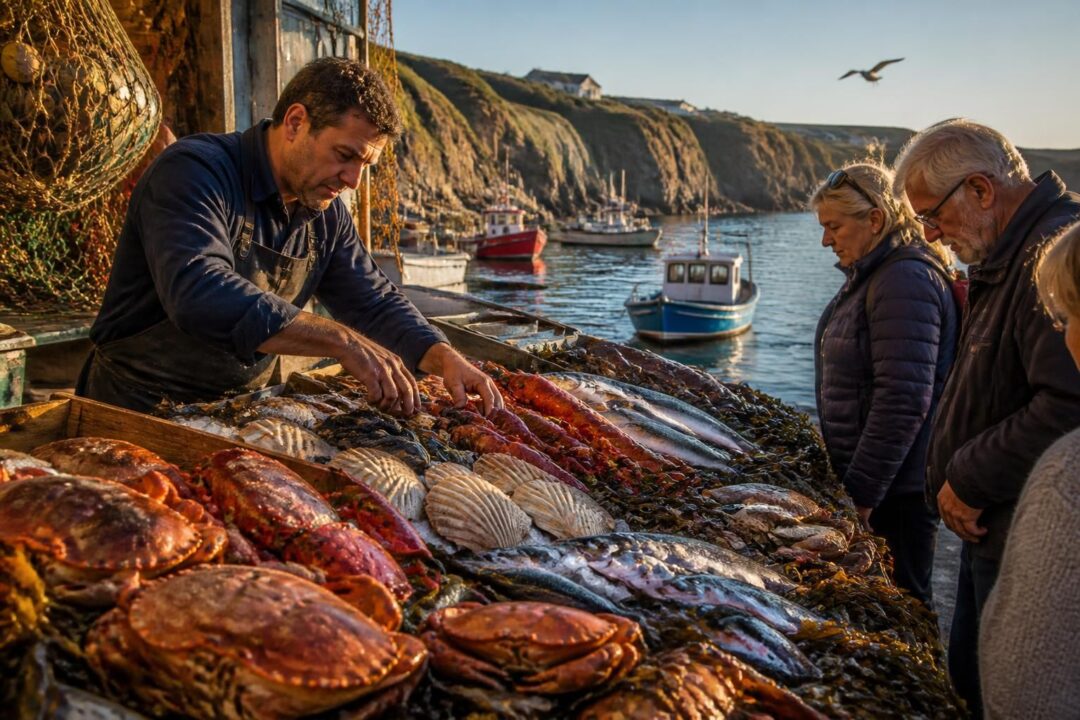
Cornwall’s seafood story starts where the land ends: working harbours, tide-scraped coves, and a fleet that still lands remarkable variety for a small county. Yet the best Cornish seafood rarely announces itself with fanfare. It appears quietly on blackboards outside harbour cafés, on a fishmonger’s slab before noon, or in a steaming paper parcel of fish and chips eaten on a sea wall. Because Cornwall sits at the meeting point of the Channel and the Atlantic, its catch changes quickly with weather, tide, and season. Therefore, knowing what to eat, when to eat it, and where to buy it can turn a pleasant meal into something memorable.
Good choices also matter more than ever. Cornwall’s fishermen use many methods, and each brings different impacts and different opportunities for sustainability. Meanwhile, consumers often prefer fillets, prepared shellfish, and convenient packs rather than whole fish, which shapes what shops stock and how the catch gets processed. A practical seafood guide helps you navigate this reality: pick species that suit the month, buy from sellers who can name the boat or port, and cook in ways that respect the ingredient. Follow that rhythm and you will eat better, support local livelihoods, and keep the coast’s food culture thriving.
- Expect constant variety: over sixty species are landed through Cornish ports, so the best “what to eat” changes week by week.
- Use seasonality as a shortcut: “when to eat” often tracks water temperature, spawning cycles, and winter storms.
- Shop closer to the quay: fishmongers often buy from the morning auction, so “where to buy” can be as simple as choosing the right counter.
- Ask about methods: Cornwall uses around thirteen fishing approaches, and each affects freshness, bycatch, and quality.
- Make cooking easy: quick seafood recipes, from crab linguine to mussels in cider, suit even small holiday kitchens.
- Lean on trusted tools: the Cornwall Good Seafood Guide helps you choose sustainable local seafood and find sellers and ideas.
Cornish Seafood Essentials: What to Eat for Flavour, Value and Versatility
The most useful way to approach Cornish seafood is to think in roles rather than rankings. Some species shine in a fast pan-sear, others excel in a slow stew, and a few reward nothing more than lemon and bread. Consequently, “best” often means “best for tonight’s plan”. In a self-catering flat, for instance, a couple of fillets and a saucepan-friendly shellfish can beat an ambitious whole fish.
A simple, reliable anchor is Cornish crab. It lands in quantity, it suits picnics and posh starters, and it carries the coast’s sweet-and-saline signature. However, crab varies with handling. Live or cooked that day tastes clean and gently briny, while tired crab can taste flat. A good fishmonger will describe the catch, not just the price, and that clue often matters most.
Cornish crab, lobster and scallops: the headline shellfish
Cornish crab usually arrives as whole cooked crab, picked white meat, or dressed crab. Each format suits different kitchens. Whole crab offers value and drama, although it needs confidence and time. Picked meat costs more, yet it makes weekday-level cooking feel like a treat. Dressed crab sits neatly in the middle, and it travels well for a beach lunch.
Lobster appears most in summer menus, when demand rises and boats work calmer seas. Even so, many shops can order it with notice. If you plan a celebratory meal, ask for lobster that was landed locally rather than trucked in. That question helps you steer towards truly local seafood without needing to memorise every detail.
Scallops, especially hand-dived ones, often taste of sweet sea and browned butter when cooked properly. Therefore, they suit minimalism: a hot pan, a short sear, and a clean sauce. Overcooking turns them rubbery, so keep the cooking time brief and the pan properly hot.
Underrated Cornish fish: a smarter “what to eat” list
Cod dominates habits, yet Cornwall regularly lands fish that offer more character and better value. Hake fries beautifully and stays juicy, so it works in fish and chips. Megrim sole cooks quickly and suits a light flour dusting. Gurnard brings a deeper flavour that stands up to tomato and saffron, and it remains a fine choice when pricier fish spikes in cost.
Mackerel deserves special mention. It arrives at its best when it is treated as urgent food, not a store cupboard plan. Buy it bright-eyed and firm, then grill it the same day. As a result, you get rich, oily flavour that pairs well with gooseberries in summer or beetroot in cooler months.
To keep choices grounded, it helps to use a reference tool that tracks sustainability and availability. The Cornwall Good Seafood Guide compiles information on many species landed at Cornish ports, and it explains fishing methods too. That blend makes it a practical seafood guide rather than a vague manifesto.
| Seafood | Typical Cornish formats | Best simple use at home | What to ask at the counter |
|---|---|---|---|
| Cornish crab | Whole cooked, dressed, picked meat | Crab mayo on sourdough, crab linguine | When was it cooked, and which port landed it? |
| Hake | Fillets, loins | Beer-battered fish, or baked with herbs | Line-caught or net-caught, and landed when? |
| Mackerel | Whole, fillets | Grilled with lemon and capers | Was it landed today? |
| Scallops | In shell, hand-dived meats | Fast sear, brown butter, parsley | Dived or dredged, and how were they stored? |
| Mussels | Rope-grown nets, bags | Steamed with cider, cream, and leeks | Harvest date and recommended purge time |
The thread that links these choices is intent. If you choose fish and shellfish to match the cooking you will actually do, you waste less and eat better. Next comes the calendar, because even the finest fish tastes ordinary if you fight the season.
When to Eat Cornish Seafood: A Seasonal Calendar Built Around the Coast
Seafood seasonality in Cornwall does not follow a neat supermarket script. Instead, it tracks sea temperature, storms, and spawning cycles, and it shifts with the working reality of day boats. Therefore, “when to eat” is partly biology and partly weather. A windy week can reduce landings, while a calm spell can flood the market with immaculate fish. If you stay flexible, you will eat better for less.
Spring often brings a sense of reset. Boats return to familiar grounds, and the range can widen quickly. Moreover, spring cooking suits lighter sauces, early herbs, and quick methods, which flatters delicate fish. Summer, on the other hand, raises demand across Cornwall’s resorts, so popular species can sell out early. That said, summer also supports the simplest pleasure: ultra-fresh fish cooked the same day and eaten outdoors.
Autumn and winter: the richest eating, if you plan it
Autumn marks a turning point in appetite and tradition. The Falmouth Oyster Festival, for instance, celebrates the start of the Fal estuary’s dredging season, which remains famous for harvesting under sail. Consequently, oysters become both a food and a local story, served raw with lemon or warmed in stout and cream.
Winter can deliver superb quality, although it demands planning. Storms can stop boats leaving harbour, so availability may shrink. However, when landings do arrive, cold-water fish can look astonishing on the slab. Winter also favours dishes that stretch value, such as chowders, curries, and fish pies that use mixed catch rather than a single prestige fillet.
A practical monthly mindset for visitors
Rather than memorising a rigid calendar, use three questions. First, what is landing well this week at the Cornwall fish market and nearby ports? Second, what methods caught it, and do they align with good practice? Third, how will it be cooked tonight? As a result, you move with the coast rather than against it.
In 2026, sustainability tools matter because choice has become more complex, not less. The Cornwall Good Seafood Guide offers detail on species and explains fishing approaches in plain language. It also links to seafood recipes, which helps you act on good intentions. A recipe is often the difference between buying a lesser-known fish and walking past it.
Seasonality also shapes how you buy. In peak weeks, the smartest shoppers arrive early, ask direct questions, and accept substitutions. That approach leads naturally to the places and people who sell the best local seafood.
Where to Buy Cornish Seafood: Fishmongers, Harbours and the Cornwall Fish Market
Knowing where to buy matters because it protects freshness and improves traceability. Cornwall’s seafood supply chain can be short, yet only if you choose it that way. Many fishmongers buy directly from the morning auction, and they can often tell you the port and even the boat. Consequently, a five-minute conversation at the counter can beat an hour of online research.
The Cornwall fish market scene centres on Newlyn, which ranks among England’s most important ports by value landed. Early mornings there feel brisk and purposeful: polystyrene boxes, shouted prices, and a flow of buyers who already know what they want. Even if you never bid, the market’s presence shapes the county’s food culture. It sets a rhythm that you can taste at lunchtime.
How to shop like a local, even on holiday
Start with timing. If you want the widest choice, shop before midday, because popular lines sell quickly. Next, ask for recommendations instead of demanding a fixed species. For instance, if cod looks tired, request a frying fish that was landed that morning. You may leave with hake or megrim, and the meal will improve.
Also, be specific about preparation. Many people prefer processed options, so counters often offer pin-boned fillets, skinned portions, and ready-dressed shellfish. That convenience keeps Cornish seafood accessible, particularly for visitors without specialist kit. On the other hand, whole fish can still offer the best value if you can roast it simply.
Directories and responsible buying
For visitors who want certainty, a directory helps. The Cornwall Good Seafood Guide includes a ‘Where to buy’ directory that points you towards sellers who support sustainable choices. It also outlines an ethos of working with the industry to reward good practice and encourage long-term improvement. That approach matters, because it connects your purchase to future stock health rather than just today’s dinner.
Local restaurants often provide clues too. If a menu names the fishmonger or port, it usually signals careful sourcing. Therefore, take a photo of that name and use it later. A simple habit like that can lead you to the right counter the next morning.
Buying well is only half the story, though. The next step is cooking with confidence, because the best local seafood deserves methods that keep it sweet, clean, and properly seasoned.
Seafood Recipes for Cornish Catch: Simple Methods That Protect Freshness
The best seafood recipes in Cornwall often share a quiet discipline: short cooking, clear flavours, and enough restraint to let the sea speak. Therefore, technique matters more than complexity. A visitor does not need a restaurant kitchen to cook fresh seafood well. Instead, a sharp knife, a hot pan, and a willingness to keep things simple will carry most meals.
Consider a recurring character: a small holiday cottage kitchen in St Ives, with one decent hob and a blunt tin opener. Even there, local seafood can shine. The trick is to choose preparations that suit limited equipment. Moreover, it helps to build meals around one hero ingredient and a few pantry staples.
Three dependable weeknight-style dishes
First, crab linguine. Warm olive oil, garlic, and a pinch of chilli, then fold through picked Cornish crab and a squeeze of lemon. Finish with parsley and pasta water for gloss. Because crab is already cooked, it needs warmth rather than heat, so keep the pan gentle.
Second, mussels in cider. Sweat leeks, add cider, steam the mussels until they open, then enrich with a little cream if you wish. Consequently, you get a dish that feels generous while using affordable shellfish. Serve with chips or bread, and treat the broth as the main prize.
Third, baked hake with herbs. Lay fillets on sliced fennel or potatoes, add butter and lemon, and bake until just opaque. Hake stays juicy, so it forgives small timing errors. As a result, it suits families and nervous cooks alike.
Handling, storage, and the non-negotiables
Freshness declines fastest when fish warms up. So, pack purchases with ice blocks and refrigerate promptly. If your accommodation fridge runs warm, place fish in a sealed box on the coldest shelf. Also, keep shellfish breathable and never store live mussels in fresh water.
Waste reduction starts with asking for the right amount. Many counters will portion fish for two, which avoids leftovers that few people truly enjoy. However, if you do have spare cooked fish, turn it into fishcakes the next day with mashed potato, herbs, and a sharp pickle.
Learning from Cornish kitchens
Cookery schools and demonstrations across the county have helped demystify seafood, especially whole fish and shellfish. That practical teaching matters because confidence changes buying habits. Once you can fillet a mackerel or dress a crab, you unlock more of what the boats land. Consequently, you rely less on the same narrow set of species.
Many sustainable seafood projects also publish recipes to help people act on good intentions. The Cornwall Good Seafood Guide, for example, shares seafood recipes designed around local landings and responsible choices. That link between guidance and dinner is where a seafood guide becomes genuinely useful.
Once you can cook simply, the final piece is choosing seafood with the future in mind, not just the weekend in mind. That means paying attention to methods, incentives, and the stories that sit behind the fillet.
Sustainable Cornish Seafood: Fishing Methods, Good Practice and Smarter Choices
Sustainability can feel abstract until it appears as a decision at the counter. Do you buy the familiar fish, or do you choose what is abundant and well-caught this week? Cornwall’s fleets use a wide range of approaches, and the method can matter as much as the species. Therefore, asking ‘How was it caught?’ is not performative. It is practical, because it signals quality and care.
Across Cornwall, fishermen land a broad mix of species through multiple ports. Tools like the Cornwall Good Seafood Guide summarise that variety and outline the fishing methods in use. It also frames an important principle: work with the industry, reward good practice, and create incentives that last. In other words, the aim is improvement, not purity tests.
Understanding methods without becoming an expert
Some methods target fish with precision, while others risk higher bycatch. Likewise, some approaches protect the seabed more than others. You do not need to master every technical detail, yet a basic mental map helps. Line-caught fish often arrives in excellent condition because handling stays careful. Pot-caught crab and lobster can also offer strong selectivity, although you still want proper sizing and local compliance.
On the other hand, mixed fisheries can land many species at once, which complicates simple rules. Consequently, the best approach is to combine method questions with seasonality and supplier trust. If the fishmonger knows the boat and handles the fish well, you usually stand on safer ground.
How supporters schemes influence what you see on menus
Some sustainability projects run supporters schemes that help businesses highlight better choices on menus, counters, and packaging. That visibility matters because it shifts demand. When customers order lesser-known fish, restaurants gain confidence to put it on the board again. As a result, the pressure eases on a small set of over-requested species.
This also connects to processing and consumer behaviour. Many people want convenient portions, so processors and fishmongers play a key role in getting Cornish seafood eaten more often. If a shop offers ready-prepared gurnard fillets, for instance, more customers will try it. Therefore, convenience can support sustainability when it encourages diversity.
Questions that lead to better local seafood choices
- What was landed today, and what looks best right now?
- Which port did it come through, and can the seller name the boat or supplier?
- How was it caught, and does that method suit the species?
- What is the simplest way to cook it without overdoing it?
- If this is sold as ‘fresh seafood’, when was it actually landed or cooked?
These questions keep the focus on outcomes: quality on the plate and resilience in the water. Next, a short set of targeted answers can clear up the common uncertainties that trip people up when buying and cooking Cornish seafood.
What should you eat if you want the freshest Cornish seafood without overpaying?
Choose what was landed locally that morning and suits a simple cooking method. Ask the fishmonger for the best value ‘frying fish’ or ‘baking fish’ rather than naming cod or salmon. Hake, megrim sole, gurnard, mussels, and mackerel often deliver excellent flavour for the price, especially when you cook them the same day.
Where to buy local seafood if you are staying away from the big harbours?
Look for an independent fishmonger, a weekly market stall, or a retailer that can name Cornish ports and landing dates. Use a directory such as the Cornwall Good Seafood Guide ‘Where to buy’ listings to find supportive sellers. When in doubt, choose a counter with clear labelling and staff who answer questions directly.
Is the Cornwall fish market open to visitors, and is it worth seeing?
The Newlyn market primarily serves trade buyers, yet public access occurs at certain times and through tours or special arrangements. Even if you only glimpse the activity, it explains why Cornwall’s seafood can be so varied. The atmosphere also helps you understand how quickly freshness moves from boat to counter.
How can you tell if Cornish crab is good quality?
Good crab smells clean and lightly briny, never sour or overly fishy. Ask when it was cooked and which port supplied it. White meat should look moist and bright, while brown meat should taste rich and savoury. If possible, buy from a seller who turns stock quickly in warm weather.
What are the easiest seafood recipes for a holiday kitchen with limited equipment?
Pick dishes that need one pan or one pot. Crab linguine uses cooked crab and minimal heat, so it stays sweet. Mussels steamed with cider and leeks deliver maximum flavour with little effort. Baked hake with lemon and herbs cooks reliably on a single tray, which reduces washing-up and stress.

Independent food and travel writer with a passion for uncovering Cornwall’s hidden culinary gems and scenic adventures. Combining local knowledge with a love for storytelling to bring Cornwall’s unique flavors and experiences to life.